


Winter Glare: The Hidden Danger You Don’t See Coming
Why winter sunlight causes more accidents, more eye strain, and more risk than summer.

When people think about eye protection, they think about summer.
But statistically and scientifically, winter glare is far more dangerous — especially for drivers, outdoor workers, runners, skiers, and anyone who spends time outside.
The low winter sun sits at the exact angle that hits your eyes, windscreen, and reflective surfaces head-on. Combine that with wet roads, frost, snow, and shorter days, and you have one of the most hazardous visual environments of the year.
Here’s why winter glare is a serious safety issue — and how the right eyewear protects your vision, your comfort, and your wellbeing.
1. The Winter Sun Sits Lower — and Directly Hits Your Eyes
In winter, the sun stays much closer to the horizon.
That means glare hits you horizontally, not from above — the most blinding angle for human vision.
Why this is dangerous:
-
It strikes directly into your line of sight.
-
It reflects aggressively off wet surfaces.
-
It makes it harder to judge distance and speed.
-
It blinds drivers even at slow speeds.
This is why winter has a dramatic spike in glare-related road incidents.
2. Road Safety: Winter Glare Causes Thousands of Accidents Every Year
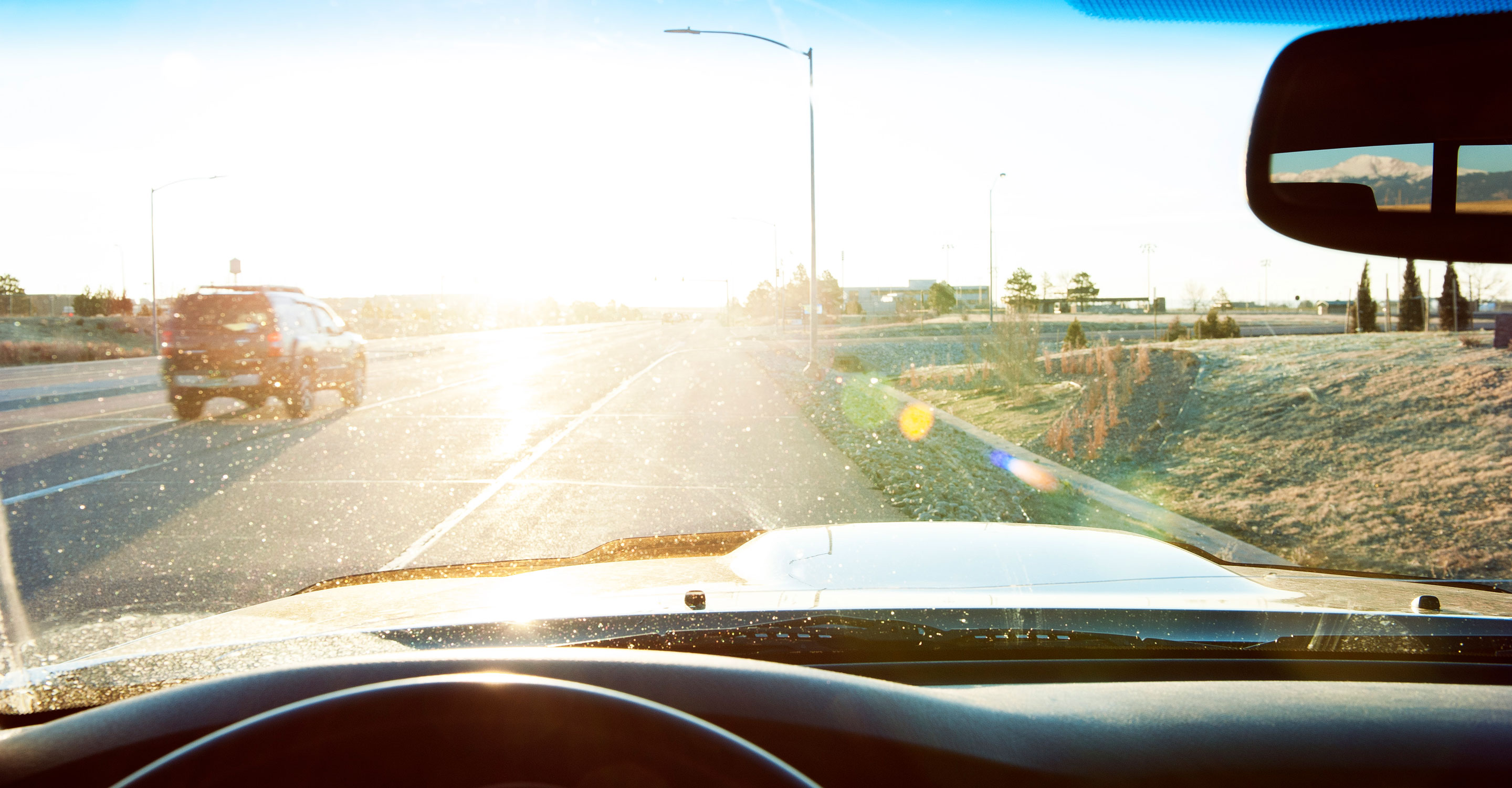
Road safety organisations report that winter glare causes more driving accidents than summer sun — because visibility drops instantly and unexpectedly.
The problem:
-
Wet roads act like mirrors
-
Ice and frost intensify brightness
-
Windscreens fog and smear, amplifying glare
-
Low sun aligns perfectly with morning and evening commutes
Even a split-second of glare-blindness at 30mph means you're driving 13 metres blind.
For cyclists and pedestrians, this reduced visibility makes winter routes even riskier.
Polarised sunglasses dramatically reduce this risk.

3. Snow & Frost Multiply Glare — Up to 80% More Light
Snow is one of nature’s strongest reflectors, bouncing back up to 80% of UV and visible light.
This causes:
-
Painful brightness
-
Instant eye strain
-
Reduced depth perception
-
Difficulty seeing surface textures
-
Faster fatigue
If you hike, ski, run, or even walk the dog in winter, this amplified glare can overwhelm your vision within minutes.
Polarised lenses cut through this reflection instantly.
4. Winter UV Is Still Dangerous — Even When It Feels Cold
Most people don’t realise:
UV radiation does NOT drop just because the temperature does.
In winter:
-
The ozone layer is thinner
-
UV scatters differently in colder air
-
Snow reflects UV back upward
This increases exposure to:
-
Eye strain
-
UV-related eye ageing
-
Photokeratitis (sunburn of the eyes)
-
Long-term retinal damage
High-quality UV400 lenses — like those across the Breo collection — protect against this year-round.
5. Winter Light Fatigues the Eyes Faster
Winter glare creates a perfect storm for eye strain:
-
Lower sun = more direct brightness
-
Contrast between dark shadows & bright light is extreme
-
Pupils constantly over-correct
-
Eyes work harder to focus through haze, frost, or fog
This leads to:
-
Headaches
-
Tired, sore eyes
-
Reduced reaction time
-
Difficulty concentrating
-
Poorer night vision afterwards
Polarised sunglasses remove this strain by reducing reflected light before it reaches your eyes.
6. Why Polarised Sunglasses Are Essential in Winter

Polarised lenses aren’t just a summer upgrade — they are a winter safety tool.
They:
-
Eliminate glare from snow, wet roads & windscreens
-
Sharpen visual clarity
-
Improve distance judgement
-
Reduce eye strain by filtering horizontal light waves
-
Make driving, cycling, and outdoor activity significantly safer
This is why skiers, mountaineers, and winter athletes won’t go outside without them.
For everyday winter life — your commute, your weekend walks, school runs, morning drives — they make a bigger difference than most people realise.
7. Why Breo Sunglasses Are Built for Winter Conditions
Breo’s polarised lens technology is engineered specifically for glare-heavy environments:
-
UV400 protection for winter UV
-
High-definition polarisation to cut snow, frost, and wet-road glare
-
Clarity-enhancing contrast for safer driving and outdoor activity
-
Soft-TRM® frames for comfort in cold-weather wear
-
Lightweight, durable design ideal for sports and everyday movement
Winter is the toughest season for your eyes — and the Breo range is built to handle it.
Conclusion: Winter Glare Is a Serious Risk — But Easy to Protect Against
Winter isn’t just darker — it’s brighter in all the wrong ways.
The low sun, reflective surfaces, and harsh contrasts create a perfect storm that strains your eyes and increases accident risk.
Polarised sunglasses aren’t an accessory in winter.
They’re essential safety gear.
Protect your eyes.
Sharpen your vision.
Move well — even in the most challenging season.